The Sun is Not Setting on Solar
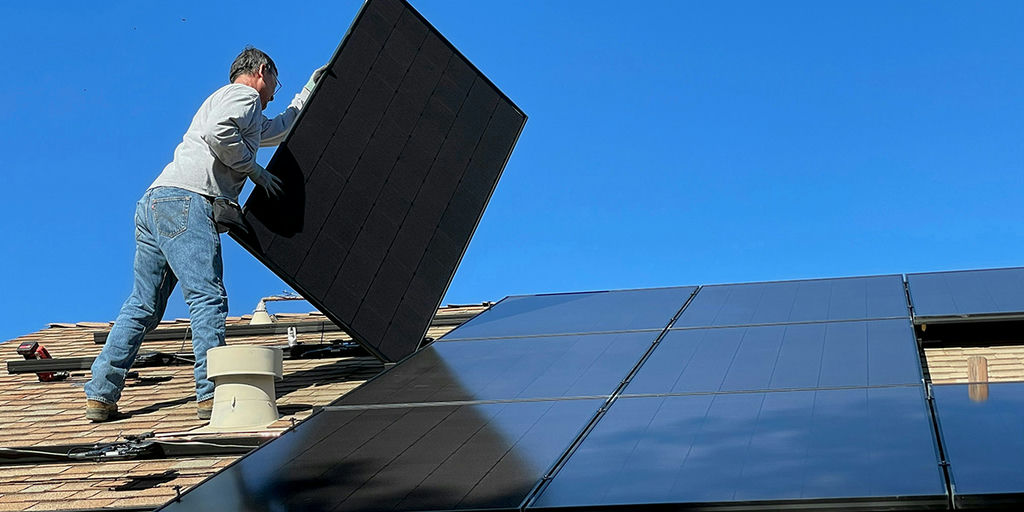
The U.S. residential solar industry faces supply chain obstacles and antagonism from the White House, but advocates remain confident that its future is (pardon the pun) bright.
“I think solar is inevitable. It's really a question not of if solar is going to be at the cornerstone of our energy system, but really how quickly will individual families, businesses, communities be able to benefit from it,” said Ben Delman, editorial director for the nongovernmental advocacy organization Solar United Neighbors.
Solar panels cost 99% less than they did in the 1970s, researchers at MIT have found. As costs plummeted, installation of electricity-generating photovoltaic (PV) panels rose steadily throughout the 21st century. By 2023, solar energy represented 55% of added electricity-generating capacity in the United States, according to Statista. Just over a quarter of all solar capacity comes from residential systems.
The benefits are multiple, the U.S. Department of Energy points out: reduced utility bills, increased home values, and access to an energy source found everywhere.
The Biden administration sought to supercharge renewable energy with the 2022 Inflation Reduction Act (IRA). That law offered a host of clean energy credit programs, including the Residential Clean Energy Credit, which provided tax credits equal to 30% of the expense for preparation, assembly, or installation of solar panels and other renewable energy technologies. The IRA also established the $7 billion Solar for All program within the U.S. Environmental Protection Agency, which issued 60 grants for states, Indian tribes, municipalities, and other stakeholders to support residential solar installation in low-income and disadvantaged communities.
PV capacity installations in the residential sector rose from 4,200 megawatts in 2021 to 5,900 in 2022 and 6,800 in 2023, Statista says. About 7% of homes nationwide have solar electricity, according to the Solar Energy Industries Association (SEIA), leaving plenty of runway for further growth.
But the Trump administration cut off the Residential Clean Energy Credit program at the close of 2025, nearly a decade before it was originally scheduled to expire. The EPA also announced its intention to claw back the Solar for All grants, a move being contested in federal court by a coalition of states and the District of Columbia.
The Trump administration’s well-recognized antipathy to clean energy is not the only obstacle facing the solar industry. Even as would-be residential users rushed to install systems on their homes before the tax credits disappeared, they (among other stakeholders) faced solar panel shortages that are expected to continue through 2026, SEIA said in its fourth-quarter 2025 solar market report. Still, “low costs, faster permitting and broad social acceptance are set to continue to drive the accelerating adoption of solar PV,” the industry trade organization. added “As a result, capacity is set to more than double between 2025 and 2030 compared with the 2019 to 2024 period.”
Delman does not dismiss the challenges coming from Washington, D.C., and beyond but emphasizes that is not the entire story when it comes to promoting solar.
“If you look at energy policy writ large, so much of it is made at the state and local level. And I think there's a real opportunity for solar supporters to make their voices heard in state houses, at local county commission meetings, as a way to protect and grow opportunities for solar energy,” he said.
Supporting permitting properties for solar use is one avenue, Delman stated: “What can we do to speed up the permitting approval process, the interconnection process, the process by which you get your utility to give the thumbs up to let you turn your system on.”
Individuals and communities can also monitor how their local utilities are managing net metering - the practice of providing credits to a customer’s bill for electricity they provide to the grid through renewable energy installations. He noted a proposal from Dominion Energy in Virginia that would decrease net metering customers’ compensation and add fees. “No matter where you live, there's probably some way that you can take part in fighting for more solar energy,” Delman said.
Consumer education is another important element, he noted. Solar United Neighbors offers a help desk to answer questions from prospective or current system owners as part of its mission to advance renewable energy, with a focus on rooftop solar. The organization also offers a service through which it will review up to three proposals a consumer receives for an installation to help the prospective owner get the best deal.
“One of the things that we see over and over is that when people share their story and tell their neighbors, tell their friends, hey, I went solar and I did good in solar, I'm saving money, I'm really glad I did this,” Delman said. “That sort of word of mouth I think is really valuable because just having that kind of personal recommendation from somebody you trust is worth its weight in gold.”
Here are some additional resources for residential consumers considering solar power:
- Solar Energy Industries Association
- U.S. Department of Energy
- EnergySage
- Center for Sustainable Energy
Earth Hero also offers dozens of actions that energy-minded individuals and communities can take to reduce their greenhouse gas output. You can find them here.