Which Way Is the Wind Blowing on Offshore Power?
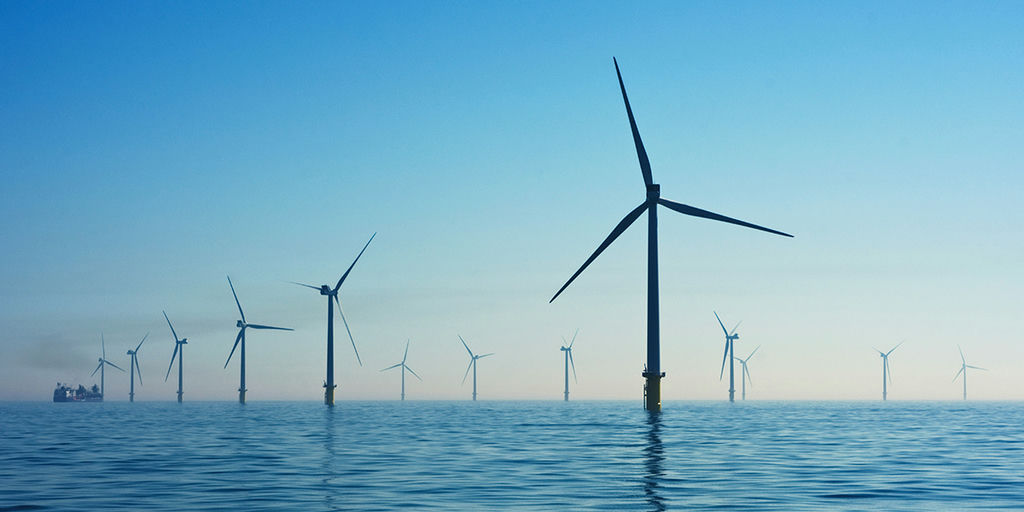
Photo by Nicholas Doherty on Unsplash
Major renewable energy installation are not easy to build and maintain, but offshore wind has particularly complex technical and political challenges — from the additional cost and difficulty of building turbines away from land to the potential impact on marine wildlife to opposition from coastal residents. And that’s before interference at the very highest levels of government in the United States.
Offshore wind today is a small slice of renewable energy production. As of 2024, 83 gigawatts of capacity had been installed worldwide, according to the Global Wind Energy Council (GWEC). By comparison, in 2025 alone, 647 gigawatts of solar capacity were installed around the world, according to clean energy think tank Ember.
But offshore wind also comes with significant advantages, as highlighted by the American Geosciences Institute and additional sources. Among them: faster and steadier offshore wind speeds that enable turbines to produce more electricity, locations miles away from any population centers, and (like other renewable energy sources) job creation without greenhouse gas emissions. Meanwhile, industry, advocates, and other supporters are striving to address the technical barriers. “Offshore wind complements other energy generation because it produces the most energy during times when other sources are less productive, especially at night and in winter,” said Katie Segal, senior director of offshore wind for the Environmental League of Massachusetts.
“Our energy demand fluctuates throughout the day (think: more demand in the evenings as people cook, do laundry, and use appliances) and throughout the year (think: more demand in summer for air conditioning, or in winter for heating),” she explained. “It matters what times of day and year energy is produced. For example, solar energy generates power during the day, but not at night. Unless you have energy storage systems, that energy cannot be saved to meet demand at nighttime. Offshore wind tends to be most productive at night and in winter, which means it is a perfect complement to other resources.”
Headwinds and Tailwinds
To help keep the planet below the 1.5-degree-Celsius warming threshold, close to 500 gigawatts of offshore wind power must be operational by 2030, according to The Nature Conservancy. At current levels, it is unlikely to reach that level — GWEC projects that offshore wind capacity will rise to 238 gigawatts by 2030. But even those 83 gigawatts are sufficient to keep the lights on in 73 million homes, Ember Chief Analyst Dave Jones noted in an October 2025 analysis.
Just 9 gigawatts of offshore wind could cut greenhouse gas emissions from New England’s energy sector by 42%, Segal said. That would be roughly equal to taking 3 million cars off the street.
Twenty-seven nations have already set targets for deployment of offshore wind installations, while another 88 have potential to establish such resources, the Global Offshore Wind Alliance said. Of those, 11 countries have offshore wind power plans in place.
But momentum is slowing. The International Energy Agency shrunk its outlook for wind capacity growth from 2025 to 2030 by 27% between 2024 and 2025, Ember noted. The organization specifically cited “removal of most planned US offshore wind capacity.”
The Biden administration had aimed for installation of 30 gigawatts of offshore wind in the United States by 2030, up from roughly 174 megawatts today. But even with supportive domestic politics, progress was challenged. In 2023, Danish multinational Ørsted ended two projects off New Jersey that were supported to provide 2,400 megawatts of capacity, blaming interest rates, inflation, and supply chain issues.
President Donald Trump has long been critical of wind power, calling it a “scam,” as he promotes the fossil fuels that are powering climate change. In his second term in the White House, his administration has sought to turn that opinion into policy. In December 2025, the U.S. Interior Department froze leases for five offshore wind projects being built in U.S. coastal waters, citing their “national security risks” by potentially interfering with radar systems. That action faced quick legal challenges, with early decisions favoring the wind industry. Trump’s 2025 executive order to halt offshore wind power leasing also ran afoul of federal courts, with the administration appearing to give up as of June 2026. The White House has sought other avenues to block offshore wind, including paying companies billions of dollars to abandon leases on both coasts.
Segal expressed optimism that the industry will recover in the United States, though she acknowledged it would not be an easy process. “It can, and I believe it will, but it’s not a guaranteed outcome — we need advocates, legislators, and regulators to act strategically,” she said. ”Even if a future administration supports renewable energy, it will take time to rebuild the institutional knowledge lost from federal agencies, especially with DOGE’s actions. There are not enough experts remaining to get permitting done responsibly and quickly. We will need a new federal administration that acts with urgency to rebuild knowledge in federal permitting agencies and invests in getting us back on track.”
States can drive efforts forward by supporting power transmission and battery storage facilities now to ready the grid for additional electricity from offshore wind and other renewables. Segal encouraged people who want to advocate for offshore wind to call or send messages to their state and federal elected representatives, urging them to support the sector. “We can all talk to our neighbors, friends, and family about the benefits of offshore wind, and encourage them to contact their own elected officials.”
Earth Hero offers dozens of actions that energy-minded individuals and communities can take to reduce their greenhouse gas output. You can find them here. Please also read Earth Hero’s articles on the future of the U.S. electric vehicle and solar industries.